Friday, March 5, 2010

Italdesign Emas Country Concept

Italdesign Emas Country Concept


Italdesign Emas Country Concept

The Emas Country interpretation portrays the Emas as an urban SUV, keeping to the length of 3550 mm but switching to a three-door architecture.

Access to the car is still easy due to generous doors measuring no less than 1350 mm in length and the ergonomic and rational position of the rear seats, that are set 120 mm further forward than in the five-door version.

In particular, the amount of passenger room rises from 4 to 5 seats by replacing the two independent rear seats with a sliding three-seater bench seat. This means that the amount of foot room for passengers in the rear can be adjusted according to requirements.

The bench seat can also be folded completely flat to increase the load volume: this boosts the luggage space from 390 to approximately 780 litres.

A few telling touches create a distinctive off-road exterior look: wheel arches, side-sill perimeter base, bumpers toughened by radial ribbing and the lower part of the tailgate are highlighted by a bronze metallic finish. The roof features a rollbar/roof-rack.

The front-end differs from the urban, five-door version due to its more aggressive look: the Proton shield is now fitted at the top of a grille surmounting a large longitudinal air intake. The two fog lights are round and sunk into the body.

The lower part of the front and rear bumpers and the side-sills are toughened by metal inserts.

A glance at the interiors

The first aspect that strikes you, even before you discover the car interiors, is the door handle: an ergonomic design that incorporates a set of secondary controls that vary from place to place.

The driver can use the handle grip to control all four power windows, door locking and unlocking, the courtesy lights, side mirror adjustment and electrical lowering of the rear head restraint to improve visibility while reversing.

The front passenger can also adjust the hi-fi system as well as his or her own window. The rear passengers can also adjust their seats from the handle grip.

Two TFT panels dominate the dashboard. They are housed side by side in the centre of the dashboard, at a concave angle.

The right-hand monitor shows the speedometer and the main car operating indicators in addition to hybrid system energy flows.

The left-hand monitor shows secondary information such as screens for the hi-fi system, telephone and internet access browser plus personalised car set-up parameters.


A third display, located beneath the central console, is a touch screen that controls all the car's main and secondary functions. The right part of this TFT screen permanently displays the climate system temperature and air flows.

The lower part of the central console, housing the ignition button and gear selector, extends towards the tunnel and can be folded down. When parking in a tight spot, forcing the driver or front passenger to leave the car from the opposite side, this central element can be lowered and the seat moved back so that they can get out on the other side without hindrance.

The central console also houses two USB ports to connect digital music players and mobile phones, plus an SD card slot for satellite navigation maps.

The dock is interchangeable and can house other phone and smartphone models. It can recharge the phones and connect them automatically to the car without the need to use other coupling systems.

Powered by Lotus Engineering
The drive system is a series hybrid plug-in developed by Lotus Engineering, a Proton Group company. It includes a 3 cylinder 1.2 litre internal combustion engine developing 51 horsepower (38 kW) at 3500 rpm that can run on petrol, ethanol, or methanol.

The front transverse internal combustion engine is coupled to a generator and serves exclusively to recharge the 11.5 kWh capacity lithium ion batteries.
Drive is assured by an electric motor with continuous power of 45 kW and 75 kW peak power.

The high maximum torque, 240 Nm, does not require the use of a gearbox.
Acceleration 0-100 km/h takes place in 14 seconds, top speed is 170 km/h and battery range in the hybrid configuration is 50 km. Full recharging of the battery pack takes three hours using a traditional 240-volt outlet.

The performance and range of the City three door electric plug-in version are currently being assessed.

Thursday, March 4, 2010

Wiesmann Roadster

Wiesmann Roadster


The Wiesmann-Roadster which is manufactured since 1993, has been adapted permanently to the latest technical development. It's a dynamic and powerful sports car, made for convertible enthusiasts, taking its very own market position, supported by an ever growing fan community. The Wiesmann brand is established.

In succeeding years the Wiesmann-Roadster has been continuously developed and kept up-to-date with engineering progress. With almost 500 examples now having been built, a quality of finish has now been achieved which is unequalled among comparable small-scale manufacturers.

On the 10th anniversary of the factory (in 2003), Wiesmann gave the models a facelift: from the 300th. Roadster, all vehicles leaving the factory had a number of optical and technical detail alterations. The classic shape of the car body, which became very successful and is particularly loved by Wiesmann customers, retained unchanged. Improvements to the interior and modest alterations to the Roadster's external appearance were signs of the continued logical development of the vehicle concept.

The customers to individualise their own hand-made dream car. Individuality is the magic word! After all, the customer wants a car that is individually equipped, tailored to his wishes, crafted to suit him and make him satisfied and happy.


The Wiesmann-Roadster with two powerful engines:
MF 30 - 170 kW/231 HP - 2,979 cc
MF 3 - 252 kW/343 HP - 3,246 cc

Even though the performance of the normally-fitted engine with 3 litres and 231 HP (achieving a power-weight ratio of 4.67 kg/HP) is adequate for a sports car, this was not always sufficient to fulfil all our customers' wishes for engine performance. This culminated in the offer of a further engine from the BMW stable, the M engine from the 3-series.

The driving qualities of the Roadsters with this engine, with its output of 343 HP and 365 Nm (resulting in a power-to-weight ratio of the car at its empty weight of 1,180 kg of 3.44 kg/HP) combined with a sequential manual 6-speed gearbox are driven to the very peak of driving enjoyment.
The extension of standard equipment covers the following new features:

Standard equipment
+ BMW M3-Motor 252 kW/ 343 HP and 365 Nm
+ Dynamics switch (throttle valve control selectable sporty/ comfortable)
+ New design of the rear light-clusters and the front flashers
+ Additional side blinkers in the sills
+ Redesigned door-lock
+ New switch design in the central console
+ New control lights display
+ New design for the instrument panel
+ Interior improvements with leather elements in cross-stitch pattern

Special equipment available at an extra price
+ Sequential 6-speed gearbox (SMG II) with switch on the steering wheel (2 driving modes: manual gear-change with steering wheel switch or with the gear stick; automatic mode)
+ Drivelogic (6 different driving programmes for comfortable driving through to sporty driving)
+ Acceleration assistant (for optimum vehicle acceleration at sports car racing level)
+ Control light display with gear indicator
+ DSC Dynamic Stability control (manual cut-out)
+ Modification of the front lighting units (additional xenon or H7 headlights)
+ Wider wheels (255/30 on 9.5x19" front, 295/30 on 11x19" rear)

The optical and aerodynamic developments, in combination with the modified standard equipment and great variety of individual possibilities, once again enhanced the attractiveness of the Wiesmann-Roadster.

Base price:
Wiesmann Roadster MF 30 € 91.000 incl. VAT
Wiesmann Roadster MF 3 € 96.000 incl. VAT

Wiesmann GT MF5

Wiesmann GT MF5


Pure energy and dynamism - that's the new Wiesmann GT MF5. This sports car for the purist, with its classic design and state-of-the-art technology, sets a new all-time high standard for the already impressive performance of Wiesmann sports cars. Equipped with a high-revving BMW V10 delivering 507 hp, it completes the sprint from a standstill to 100 km/h in just 3.9 seconds. With a sensational power-to-rate ratio of 2.7 kg/hp and a top speed of 310 km/h, this Coupé plays for top honours in the premier league for sports cars. Exclusive driving enjoyment is guaranteed with the Wiesmann GT MF5!

"The MF5 we are primarily addressing the wishes of many GT enthusiasts who want to express their individuality through even more power and sportiness," says Friedhelm Wiesmann, the spokesperson for the management at Wiesmann. His brother, Martin Wiesmann, responsible as director for development and production, displays similar enthusiasm for the new Wiesmann model: "The GT MF5 represents the ideal model with which to round off our range at the top end, and it is certainly the most exciting sports car that Wiesmann has ever presented to the public."


The car's powerful exterior styling already hints at the outstanding driving dynamics that await the driver of a Wiesmann GT MF5: the extremely low, crouching body combined with the wide tyres promise power in abundance. The wing and the diffuser provide plenty of downforce on the rear suspension, guaranteeing excellent stability even at high speeds. A high-performance suspension system has been developed with a great deal of effort at the manufacturing plant in Dülmen, offering exclusive driving enjoyment to the driver of an MF5, but also the necessary degree of safety. Energy-absorbing body zones also contribute to the safety of the Wiesmann GT MF5, along with the rigid aluminium monocoque with integrated side-impact protection, as well as ABS as standard in conjunction with DSC dynamic stability control. The low overall weight combined with aerodynamic perfection also delivers an extremely low emissions figure in this performance category.

The cockpit is geared in all respects to the functions of a sports car. Everything that is necessary for driving and operating the vehicle is within perfect reach of the driver. The low seating position, just ahead of the rear axle, ensures that the driver senses and experiences every movement of this driving machine. Optimum contact with the vehicle is guaranteed by the newly developed sports bucket seats with excellent lateral support, which can be adapted to the body contours of driver and passenger as required. One push of the silver starter button of the Wiesmann GT MF5, just next to the ignition key, and the fun begins!


Specifications
* Kerb weight: 1,380 kg
* Maximum permissible weight: 1,650 kg
* Dimensions (Length / Width / Height): 4.30 m / 1.95 m / 1.17 m
* Wheelbase: 2,507 mm
* Chassis: aluminium monocoque, glued and riveted
* Body: high-quality, glass fibre reinforced composite material, diffuser, rear wing, enlarged air intakes, green tinted windows, laminated windscreen, side and rear windows made of safety glass, free choice of external paint finishes
* Engine: front-mounted V10 mid-engine with three-way catalytic converter, petrol injection, stainless steel twin exhaust pipes
* Cylinders/valves: 10/4
* Engine capacity: 4,999 cc
* Bore/stroke: 92/75.2 mm
* Maximum power: 373kW (507hp) @ 7750 rpm
* Maximum torque: 520Nm @ 6100 rpm
* Maximum engine speed: 8,250 rpm
* Compression: 12:1
* Fuel grade: 95-98 RON
* Fuel consumption:
o combined 14.8 l / 100 km
o urban 22.7 l / 100 km
o extra-urban 10.2 l / 100 km
* CO2 emissions: combined 298 g/km
* Emissions level: EU 4
* Gearbox: 7-speed sequential manual gearbox (SMG)
* Differential: variable differential lock
* Top speed: 310 km/h
* 0-100 km/h: 3.9 s
* Petrol tank capacity: approx. 70 l.

Suspension/wheels
* Front suspension: Double wishbone, anti-roll bar
* Rear suspension: Double wishbone and trailing link, anti-roll bar
* Front wheel rims:: 8.5 x 19", BBS RS-GT alloy wheels
* Rear wheel rims:: 10.0 x 19", BBS RS-GT alloy wheels
* Tyre dimensions: 245/40 ZR 19 - front / 275/35 ZR 19 - rear
* Front brakes Dual-piston sliding callipers with perforated composite brake disks 374 diameter x 36 mm
* Rear brakes Single-piston sliding callipers with perforated composite brake disks 370 diameter x 24 mm

Safety
* Integrated side impact protection
* ABS (Antilock Braking System)
* DSC (Dynamic Stability Control)
* Height and reach-adjustable safety steering column
* BMW security system incl. recognised electronic immobiliser (EWS lll)
* Three-point seat belts
* Hydraulic power steering

Volvo C70

Volvo C70


The Volvo C70 is in actual fact two attractive cars in one. It is as much an elegant coupe as it is a sporty convertible. With the same gentle, clean lines in both versions. Above all, however, the Volvo C70 is a car to enjoy. For people who reward themselves with the best in life.

"The Volvo C70 has classic convertible lines and a strong identity of its own. What we have done is to carefully redesign the front and rear so they harmonise more with both today's and tomorrow's Volvo models. We have also increased the exclusiveness of the materials and trim details to enhance the atmosphere of luxury and enjoyment inside the car," explains Fedde Talsma, Exterior Chief Designer at Volvo Cars.

Modernised, self-assured front

With its new front, the Volvo C70 reveals traces of the Volvo S60 Concept Car that was unveiled in early 2009. Thereby the Volvo C70 is upgraded to relate more closely to the design language of the larger cars in the Volvo model range

Bodywork details such as the front wings have also been redesigned, contributing to the decidedly altered appearance. The nose is more wedge-shaped and has been given added three-dimensional depth by moving some elements of the front both longitudinally and vertically. The new headlamps and the décor around the foglamps, for instance, have been angled offset up and to the rear, at the same time as the detailing of the lower grille has been enhanced.

The new Volvo C70 launched at the Frankfurt Motor Show in mid-September 2009 has the same smart three-piece steel roof, practical seating for four adults and world-leading convertible safety as before. With an updated design and elevated premium feel, the Volvo C70 also delivers an "I want" aura of absolute world class.

The Volvo C70 is in actual fact two attractive cars in one. It is as much an elegant coupe as it is a sporty convertible. With the same gentle, clean lines in both versions. Above all, however, the Volvo C70 is a car to enjoy. For people who reward themselves with the best in life.

"The Volvo C70 has classic convertible lines and a strong identity of its own. What we have done is to carefully redesign the front and rear so they harmonise more with both today's and tomorrow's Volvo models. We have also increased the exclusiveness of the materials and trim details to enhance the atmosphere of luxury and enjoyment inside the car," explains Fedde Talsma, Exterior Chief Designer at Volvo Cars.


Modernised, self-assured front
The Volvo C70 reveals traces of the Volvo S60 Concept Car that was unveiled in early 2009. Thereby the Volvo C70 is upgraded to relate more closely to the design language of the larger cars in the Volvo model range

Bodywork details such as the front wings have also been redesigned, contributing to the decidedly altered appearance. The nose is more wedge-shaped and has been given added three-dimensional depth by moving some elements of the front both longitudinally and vertically. The new headlamps and the décor around the foglamps, for instance, have been angled offset up and to the rear, at the same time as the detailing of the lower grille has been enhanced.

Wednesday, March 3, 2010

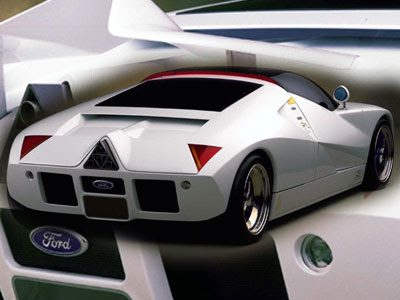
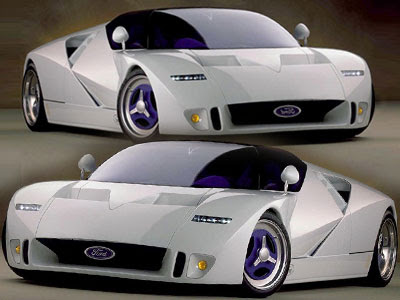
2010 Ford GT90 Super Sport Car Concept going to auction

2010 Ford GT90 Super Sport Car Concept

If Ford first introduced the GT90 Concept at the 2010 Detroit Auto Show next month, it would still be one of the most eyecatching cars on the show floor. What's amazing is that Ford unveiled the GT40 successor nearly 15 years ago. What's more, even by today's standards it's still a supercar among supercars.
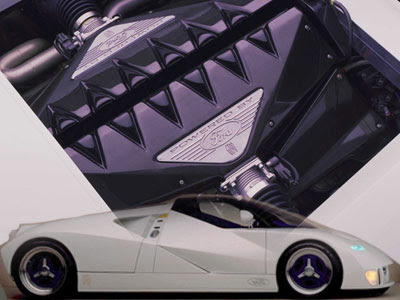
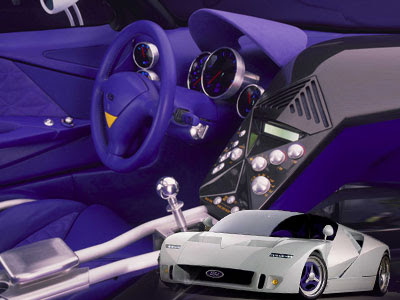
The quad-turbocharged 6.0-litre V12 puts out an estimated 720 horsepower, the body is constructed completely of carbon fiber and top speed is somewhere in the 400 kph range. The only hints that it's not a modern supercar are the all-blue interior and wheels that look dated now.
So what's all the fuss about the GT90 Concept now? RM Auctions in the States has just announced that it will be offering the concept car at its upcoming Arizona sale. That's right, this is your chance to own one of the coolest concept vehicles of all time. This is the first time that the GT90 Concept has ever been publicly for sale at auction, and RM claims that it is in "excellent running condition, having been properly stored and maintained over the year." No estimated on price is given, but we're guessing it will take a large suitcase of cash to take the car home.
2010 Ford GT90 Super Sport Car Concept

The one-off GT90 Concept Car, labeled immediately as "the world's mightiest supercar" by Ford Motor Company on December 6, 1994, was the spiritual successor to the Ford GT40, the product of a colossal feud in the early 1960s between the Blue Oval from Dearborn and the Prancing Horse of Northern Italy. The GT90 draws from the design cues of its heritage and pays homage to the famed Le Mans-winning Ford GT40s of the 1960s, which were created after the failed attempt by Ford to buy out Ferrari.
At a development cost in the neighborhood of $3 million, the GT90 was certainly worthy of pulling styling cues from the original Ford GTs, and although it was never meant for production, it was built according to a Ford press release as a "test bed for technology, engineering and design concepts, and driver-oriented features that eventually may be used in Ford production vehicles."
Officially unveiled to the public in January 1995 at the Detroit Auto Show, the GT90 is finished in bright white with a bright blue and carbon fiber interior. It features a mid engine quad-turbocharged V12 that produces an estimated 720 horsepower and 660 pound-feet of torque. As a result, it had a claimed top speed of 253 mph, which even by today's standards would make it one of the fastest production cars in the world – faster even than a McLaren F1, which was widely considered the world's preeminent supercar at the time.
2010 Ford GT90 Super Sport Car Concept

The engine, which was a 48-valve six-liter V12, had to be combined together with four Garrett Systems T2 turbochargers in order to reach its estimated 720 horsepower and was based on the Ford Modular engine. Created by using parts of two Lincoln V8 engines, engineers removed the last pair of cylinders from the rear of one engine and the first pair of cylinders from the front of the other engine. The cut-down engines were then welded together with the final result being a 90-degree V12, which utilized a 90.2 mm bore and a 77.3 mm stroke to achieve maximum power.
The GT90 features the FFD-Ricardo five-speed manual gearbox found on the XJ220 and, considering the torque load that it is designed to handle, is noted as having a relatively light shift quality. Also borrowed from the XJ220 comes the all around double wishbone suspension that was designed to enable the car to handle well at top speeds.
2010 Ford GT90 Super Sport Car Concept

Using Ford's new "Edge" design philosophy, the car incorporated advanced technology with a mixture of flat planes, angles, glass and triangular shapes that seemingly all collided together. The GT90 was the first car created using this new styling directive from Ford, which went on to be responsible for the creation of other Ford products like the Ka and Cougar. The effect is most impressive and a wonderfully executed stylistic throwback to its GT40 predecessor, which at once stays true to its heritage but acknowledges the advances in modern design. Taken directly from race car technology, the GT90 body panels are molded out of carbon fiber while the chassis is formed out of a honey-comb sectioned aluminum monocoque.
The GT90 is a test bed of advanced technology and design. It sports a tinted, laminated glass bubble over the cockpit and a spoiler that rises off the rear deck at high speeds. According to Ford, it has a "design that tightly enclosed its mechanicals with no wasted space; high tech lighting and blind-spot detection systems; and tiles like those on the space shuttle to shield the V12's exhaust outlets."
2010 Ford GT90 Super Sport Car Concept

After its unveiling in Detroit, the GT90 made its rounds on the Auto Show Circuit in 1995, traveling around the world to Frankfurt and as far away as Tokyo. With few other showings in between, the car recently was shipped over to Europe to be on display in the Ford of Europe 2008 exhibit at the Goodwood Festival of Speed. After returning home, the car was shipped to Alabama where it was on display as part of the Mustang 45th Anniversary Celebration.
This superb concept car remains in excellent running condition, having been properly stored and maintained over the years in between its show appearances. RM Auctions is proud to publicly offer the GT90 for the first time ever at auction. A remarkable one-off piece of automotive history and cutting-edge design, its offering may very well be a once
 
coompax-digital magazine